There is a version of email marketing that most retail businesses are running and a version they should be running—and the revenue gap between them is significant, specific, and entirely closable. The version most retail owners are running: a broadcast list, a scheduled send, a promotional offer, a subject line written the night before. Open rates hover around 20%. Click-through rates linger below 3%. Conversions happen sporadically, driven by the percentage of the list that happened to need the product when the email arrived. Unsubscribe rates creep upward. The list gradually exhausts its engagement, and the response to declining performance is to send more frequently, accelerating the exhaustion.
The version they should be running: custom marketing automation systems for quality leads—behavior-triggered, individually relevant, precisely timed email sequences that respond to what each subscriber is actually doing rather than broadcasting the same message to everyone simultaneously. The results are categorically different: Automated email campaigns demonstrate up to 2,361% higher conversion rates than traditional broadcast campaigns. Marketing automation delivers an average $5.44 return for every $1 invested.
The transition between these two states is not a technology problem. It is a strategy and implementation problem—and this guide provides the precise roadmap for making it.
Why Email Blasts Are Costing Retail Businesses Revenue They Cannot See?
The most insidious characteristic of basic email blasts is that they appear to work. A promotional email to 10,000 subscribers produces a few hundred clicks and some sales. The ROI calculation looks positive. The instinct is to keep doing what is working.
What this calculation misses is the counterfactual: what those same 10,000 subscribers would have generated if they had received behavior-triggered, individually relevant communication rather than a uniform broadcast. Research published by Bloomreach places the average retail email conversion rate at 2.25%—which sounds reasonable until you understand that the retailers achieving 4–6% conversion rates in the same category are doing so through automation sophistication, not list size or brand equity advantage.
The specific revenue leaks that basic email blasts create:
The abandoned cart leak—
the single highest-value automation sequence in retail, and the one most absent from basic email programs. Shopify reports that the average cart abandonment rate across retail e-commerce is 70.19%. Each abandoned cart that receives no follow-up email is lost revenue with a quantified value. Automated cart abandonment sequences recover 5–15% of abandoned carts—a revenue recovery that basic broadcast programs structurally cannot capture.
The browse abandonment leak—
website visitors who viewed specific products without adding to cart and received no follow-up. Browse abandonment automation sequences that deliver personalized product reminders to recover a significant portion of this high-intent audience that basic programs have no mechanism to re-engage.
The post-purchase relationship leak—
customers who bought once, received no meaningful post-purchase communication, and were left to make their own decision about whether to return. Automated post-purchase sequences that deliver order confirmation, usage guidance, review requests, and cross-sell recommendations within the high-engagement window following purchase produce a measurable repeat purchase rate improvement that one-time buyers without follow-up sequences rarely generate.
The lead nurture leak—
email subscribers who signed up received the same promotional blast as everyone else, regardless of how they subscribed or what content they engaged with and gradually disengaged because nothing they received was specifically relevant to their demonstrated interests.
Email marketing still delivers between $36 and $45 return per $1 spent in 2026—making it the highest-ROI marketing channel available to retail businesses. Custom marketing automation systems are the mechanism through which that ROI potential is actually realized rather than approximately approached.
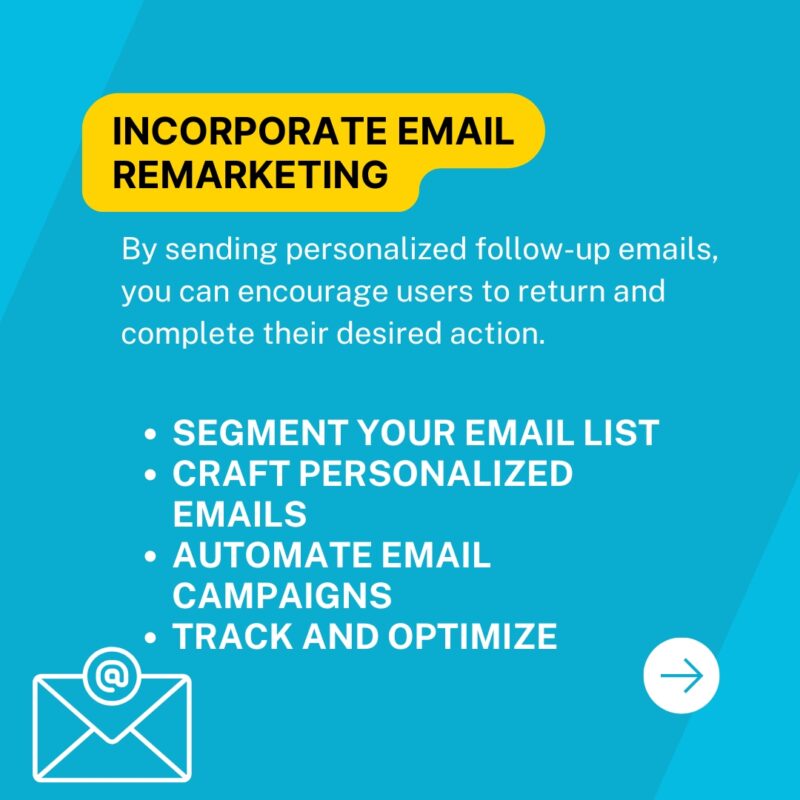
The Migration Framework: Six Stages from Blast to Automation
Stage 1: Audit Your Current Email Program Before Touching the Technology
The most common error in the transition from basic blasts to marketing automation is beginning with platform selection rather than a strategic audit. Moving a broken strategy to a more sophisticated platform produces sophisticated failure rather than improved results.
Before selecting an automation platform or building a single workflow, audit your current email program across four dimensions:
1. List quality—
what is the current state of your subscriber list? How many contacts are active (opened or clicked in the last 90 days), how many are dormant, and how many are likely invalid addresses? A list with 30% active engagement and 70% dormant contacts requires a re-engagement campaign before automation investment—because automation built on a deteriorated list produces deliverability problems that suppress the entire program’s performance.
2. Segmentation baseline—
what data do you currently hold on each subscriber? Purchase history, product category preferences, acquisition source, location, and browsing behavior are the segmentation dimensions that personalized automation requires. Assess what data exists and what data capture needs to be added before the automation sequences that depend on it can be built.
3. Conversion attribution—
which specific emails, subject lines, offers, and content types in your current program produce the highest open rates, click-through rates, and conversion rates? This historical performance data is the calibration input for your automation design—identifying what resonates with your specific audience rather than forcing you to start from generic industry templates.
4. Customer journey mapping—
document the actual stages your retail customers move through, from first awareness or subscription through first purchase, repeat purchase, and loyalty. Each stage requires different messaging, different frequency, and different calls to action—and this mapping is the strategic blueprint that every automation workflow should serve.
top marketing workflows to automate
Stage 2: Choose Your Automation Platform for Retail-Specific Needs
Platform selection for retail marketing automation should be driven by three criteria: native integration with your retail e-commerce or POS infrastructure, behavioral trigger capability that supports the specific automation sequences retail conversion depends on, and segmentation sophistication that allows the personalization depth your audience data supports.
- Klaviyo— the dominant retail and e-commerce email automation platform in 2026, with native integrations for Shopify, BigCommerce, WooCommerce, and Magento that pull purchase history, browsing behavior, and product interaction data directly into the automation and segmentation engine. Pre-built flows for cart abandonment, browse abandonment, welcome series, post-purchase, and win-back sequences deploy in minutes. The strongest choice for retail businesses with an e-commerce component.
2. HubSpot— the strongest all-in-one platform for retail businesses that want email automation integrated with CRM, landing page, lead scoring, and sales pipeline management. Best suited for retail businesses with a significant relationship-selling component—loyalty programs, high-value repeat purchase products, or B2B retail.
3. ActiveCampaign— the strongest behavior-based automation logic engine in the mid-market, with the most flexible conditional workflow architecture for retail businesses with complex customer journey segmentation needs. Particularly strong for multi-location retail with different regional audience segments.
4. Brevo (formerly Sendinblue)— the most cost-effective platform for retail businesses beginning the transition from basic to automated email, with strong core automation capability at a price point accessible to small and midsize retail operations.
5. Mailchimp— the most accessible entry point for retail businesses with basic list management needs and limited technical resources, with Customer Journey Builder providing foundational automation capability at minimal implementation complexity.
This is precisely where investing in dedicated retail digital marketing services accelerates the platform selection and migration process most significantly. Quality retail digital marketing services bring platform expertise across the full automation landscape—including the integration architecture, data migration strategy, and workflow design that transforms platform capability into revenue-producing automation—without requiring retail owners to develop technical expertise that takes months to build independently. For retail owners who want the transition from basic blasts to custom marketing automation to produce revenue impact in weeks rather than months, retail digital marketing services are where the implementation speed and configuration quality that fast returns require are most reliably delivered.

Stage 3: Build Your Data Foundation Before Your First Workflow
Automation is only as intelligent as the data it operates on. Before building a single behavioral trigger or personalization sequence, the data foundation that powers them must be in place.
Behavioral data capture—
ensuring that subscriber-level website behavior (pages visited, products viewed, categories browsed, time on site) is flowing into your automation platform from your analytics system. Without this integration, your automation can respond to email engagement but not to website behavior—losing the most powerful trigger signals available.
2. Purchase history integration—
ensuring that each subscriber’s complete purchase history (products purchased, categories, order value, purchase frequency, last purchase date) is accessible within the automation platform’s segmentation engine. This data powers the product recommendations, cross-sell suggestions, and replenishment reminders that produce the highest-value automation sequences for retail.
3. Subscription source tagging—
tagging each subscriber with the specific mechanism through which they joined your list (website popup, checkout opt-in, social media ad, in-store sign-up, specific lead magnet) so that welcome sequences can be calibrated to the context in which subscription occurred, rather than delivering a uniform welcome regardless of acquisition context.
4. Preference data capture—
building preference capture into your welcome sequence (product category interests, communication frequency preference, size, or specification data where relevant) that improves segmentation accuracy from the first interaction rather than relying entirely on behavioral inference.
Stage 4: Build Your Core Automation Sequences in Priority Order
With the platform selected and data foundation in place, the automation build should proceed in priority order—highest revenue impact sequences first, with each subsequent sequence building on the data and performance insights from those preceding it.
Priority 1: Welcome Series (Days 1–14)
The single highest-engagement window in any subscriber’s relationship with your brand. Welcome email open rates average 68.6%—more than four times the average broadcast open rate. A properly designed retail welcome series (three to five emails over fourteen days) delivers the brand story, social proof, best-seller introduction, first-purchase incentive, and product education that converts new subscribers into first-time buyers before the initial engagement enthusiasm fades. A generic “thanks for subscribing” single email wastes the highest-opportunity window in the subscriber lifecycle.
Priority 2: Cart Abandonment Sequence (Triggered, 1–3 emails over 24–72 hours)
The highest-ROI automation sequence in retail email marketing—recovering 5–15% of abandoned carts that represent completed intent without completed transaction. A three-email cart abandonment sequence performs significantly better than a single reminder: email one (sent within one hour of abandonment) is a simple, frictionless product reminder; email two (sent 24 hours later) adds social proof and addresses the most common purchase hesitation for the specific product category; email three (sent 72 hours later) introduces a limited-time incentive for genuinely hesitant buyers. Urgency language and personalized product imagery in the abandonment sequence significantly outperform generic reminder templates.
Priority 3: Browse Abandonment Sequence (Triggered, 1–2 emails over 24–48 hours)
For subscribers who viewed specific product pages without adding to cart—a lower-intent signal than cart abandonment but a significantly higher-intent signal than general website browsing. Browse abandonment sequences that deliver personalized product reminders within 24 hours of the browsing session recover a meaningful proportion of this high-interest audience, particularly for retail categories with longer consideration cycles (furniture, high-value apparel, electronics).
Priority 4: Post-Purchase Series (Triggered, 4–6 emails over 30–60 days)
The automation sequence that transforms single transactions into customer relationships. A complete post-purchase series covers: order confirmation and fulfillment update (immediate), delivery confirmation and usage onboarding content (on delivery), review request (5–7 days post-delivery), cross-sell recommendation based on purchase category (14 days post-delivery), loyalty program introduction or repeat purchase incentive (30 days post-delivery), and win-back trigger if no second purchase within 60 days. Each email in this sequence has a specific job in the customer lifecycle—and each is triggered by the preceding purchase event rather than scheduled to broadcast dates.
Priority 5: Win-Back Sequence (Triggered by inactivity threshold)
Triggered when a previously active subscriber or customer crosses a defined inactivity threshold—typically 60 days of no email engagement for subscribers, 90–120 days of no purchase for customers. Win-back sequences that combine a compelling offer with a direct “we miss you” message and a clear unsubscribe path produce two valuable outcomes: re-engagement of genuinely interested customers who had simply drifted, and a clean unsubscribe from genuinely disinterested contacts—both of which improve list health and deliverability performance.
Stage 5: Build Your Segmentation Architecture
Automation sequences that deliver the right message to the right subscriber are built on a segmentation architecture that divides the subscriber base into groups whose members share specific behavioral and demographic characteristics relevant to content and offer differentiation.
The core segmentation dimensions for retail email automation:
Engagement tier segmentation—
active subscribers (opened or clicked in last 30 days), warm subscribers (30–90 days), cooling subscribers (90–180 days), and dormant subscribers (180+ days). Each tier receives different communication frequency and content approach—active subscribers receiving full automated program access, dormant subscribers receive re-engagement sequences before being suppressed from regular sends to protect deliverability.
2. Purchase behavior segmentation—
first-time buyers, repeat buyers, high-value customers, and lapsed purchasers. Each segment receives automated sequences calibrated to their specific position in the customer lifecycle—with first-time buyer sequences focused on second purchase conversion and high-value customer sequences focused on loyalty deepening and premium product introduction.
3. Product category affinity segmentation—
subscribers whose browsing and purchase history reveals specific category preferences receiving product recommendations and content curated for those preferences rather than full-catalog broadcasts. A subscriber who has consistently purchased from the women’s wear category, receiving women’s wear-specific new arrival announcements, converts at dramatically higher rates than the same subscriber receiving the full catalog broadcast.
4. Acquisition source segmentation—
subscribers acquired through different channels (website organic, paid social, in-store, referral) receive welcome sequences calibrated to their acquisition context. A subscriber who signed up through a specific lead magnet for a specific product category should receive a welcome sequence that acknowledges and builds on that specific interest—not a generic brand introduction that ignores the specific context that generated the subscription.
Stage 6: Implement Testing, Measurement, and Continuous Optimization
Custom marketing automation systems for quality leads are not set-and-forget infrastructure—they are continuously optimized revenue systems. The measurement and optimization framework that produces compounding returns from automation investment:
A/B testing architecture—
every significant automation sequence should have a structured testing program running continuously: subject line variants, send time optimization, offer type and size, email length and format, CTA placement and copy. The automated nature of these sequences means that even marginal conversion improvement compounds across the full subscriber volume at every trigger event.
Automation-specific performance metrics—
standard broadcast email metrics (open rate, click-through rate) require supplementation with automation-specific metrics: flow revenue per recipient, trigger event to conversion rate, sequence completion rate, and revenue attributed to each automation sequence versus broadcast sends. These metrics identify which automation sequences are generating the revenue that justifies the investment and which require optimization.
Predictive send time optimization—
AI-powered send time optimization that delivers each automated email at the time each subscriber is most likely to open—improving open rates by 20–30% compared to uniform send times without additional content investment.
List hygiene and deliverability monitoring—
monthly list hygiene processes that identify and suppress invalid addresses, consistent spam complaint monitoring, and domain authentication setup (SPF, DKIM, DMARC) that maintains the inbox placement rates on which conversion depends. Automation systems operating on deteriorated lists or without proper authentication produce deliverability problems that suppress the entire program’s performance regardless of sequence quality.
The Automation Stack for Retail: Recommended Technology Architecture
The technology architecture that supports a complete custom marketing automation system for retail-quality lead generation:
Core automation platform—
as the central automation, segmentation, and measurement engine.
CRM integration—
bidirectional sync between the email automation platform and the retail CRM, ensuring that purchase history, customer service interactions, and sales team activity are available within the automation platform’s segmentation and triggering logic.
Website behavior tracking—
the automation platform’s JavaScript tracking code is installed on the retail website, capturing page views, product views, category browsing, and form submissions at the individual subscriber level.
Analytics and attribution—
UTM parameter discipline across all automated email links, Google Analytics 4 integration, and revenue attribution reporting that connects specific automation sequences to specific revenue outcomes through complete conversion path visibility.
SMS integration—
for retail businesses with customer mobile data, SMS-integrated automation that delivers cart abandonment and high-urgency sequence touchpoints through the channel with the highest open rates (98% for SMS versus 20–25% for email) to subscribers who have demonstrated SMS-responsive behavior.

Making the Transition With Expert Implementation Support
The transition from basic email blasts to custom marketing automation systems for quality leads involves platform selection, data migration, integration architecture, segmentation design, workflow build, content creation, testing configuration, and performance measurement—a scope of work that most retail owners are implementing alongside running their core business.
This is where experienced performance marketers with specialist retail email automation expertise deliver their most measurable impact. Performance marketers who have built and optimized custom marketing automation systems across multiple retail categories and business sizes bring the strategic intelligence to design automation architecture calibrated to your specific customer journey, the technical capability to implement integrations and workflow logic that would take an in-house team months to develop, and the ongoing optimization expertise that ensures your automation system produces improving returns month-over-month rather than plateauing after initial setup. For retail owners who want the transition from email blasts to custom automation producing quality leads from the first month of deployment—not the sixth—performance marketers with demonstrated retail automation results are where that speed and precision come from.
What “Quality Lead” Actually Means in Retail Email Automation?
The concept of lead quality in retail email marketing is worth defining precisely—because the shift from broadcast blasts to custom automation is fundamentally a shift from quantity-focused marketing (reaching everyone with the same message) to quality-focused marketing (reaching each subscriber with the message most relevant to their specific intent and stage).
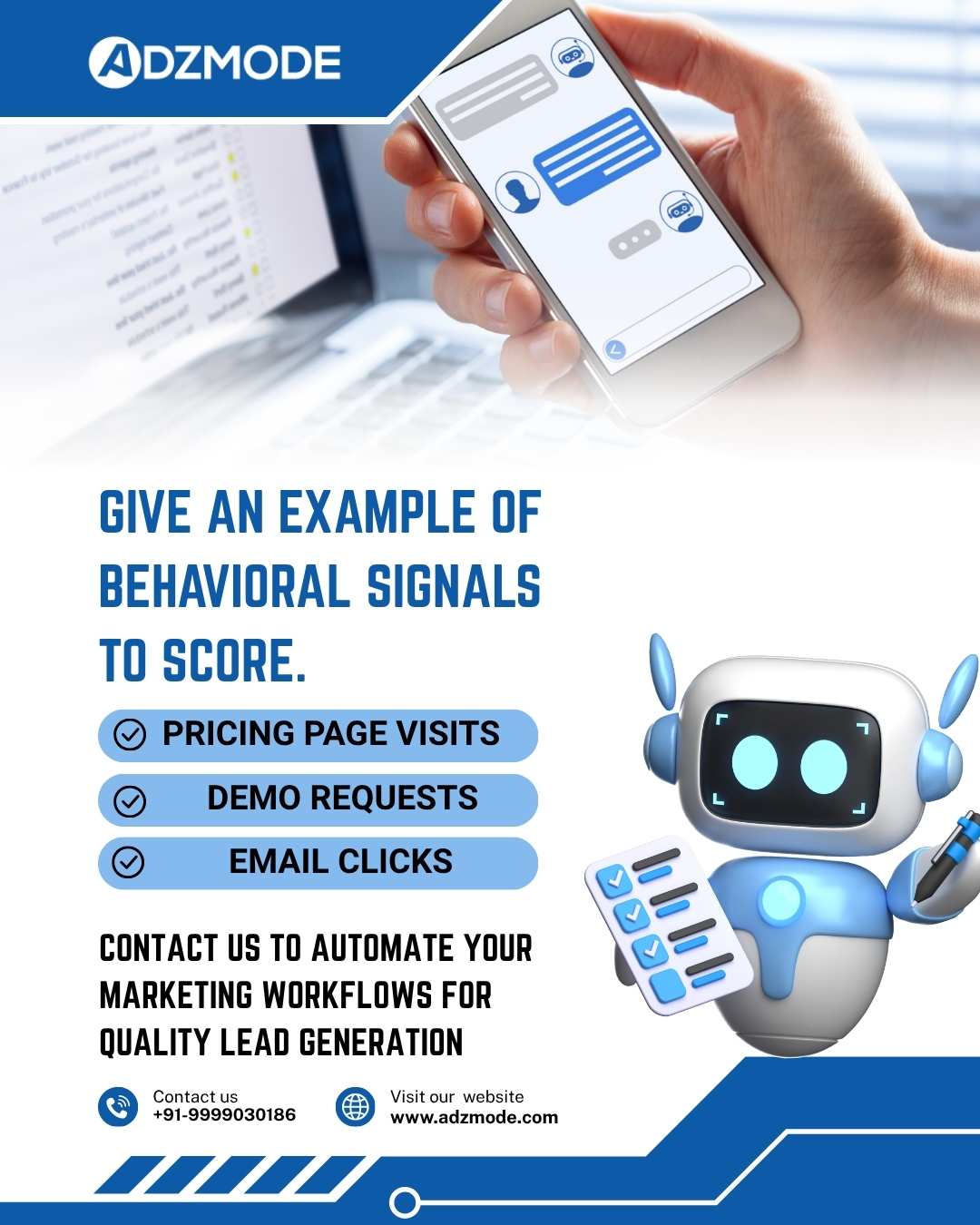
In retail email automation, a quality lead is not just a subscriber—it is a subscriber who has demonstrated specific behavioral signals that indicate purchase intent:
- A browse abandoner who viewed a specific product category three times in a week is a quality lead whose intent signal justifies a triggered, personalized sequence with a specific offer
- A cart abandoner who loaded a product, completed address fields, and exited at the payment step is a quality lead whose conversion probability justifies immediate, personal, incentive-bearing re-engagement
- A loyal customer who has purchased three times in the last six months and just opened four consecutive emails is a quality lead for a loyalty program invitation and a premium product introduction
- A dormant subscriber who reactivated after a win-back email and immediately browsed the new arrivals section is a quality lead whose renewed intent justifies reintroduction to the full automation program with elevated frequency
Custom automation systems create quality leads by identifying and responding to these behavioral signals, which broadcast systems structurally cannot detect, distinguish, or respond to. The result is not just better email marketing. It is a fundamentally different relationship between the retail brand and each subscriber—one based on relevance, timing, and individual context rather than the uniform mass communication that broadcast email represents.
FAQ: Transitioning to Custom Marketing Automation Systems
1. How long does the transition from basic email blasts to full automation take?
A foundational automation build covering welcome series, cart abandonment, and post-purchase sequences—the three highest-priority sequences for retail revenue impact—can be completed in four to six weeks with a dedicated implementation resource. A complete automation architecture, including browse abandonment, win-back, loyalty, and advanced segmentation, typically requires three to four months from platform selection to full deployment. The important sequencing principle is to launch the highest-revenue-impact sequences first rather than waiting for the complete architecture to be built before going live. Cart abandonment sequences alone typically recover enough revenue in the first month to pay for the full platform investment—making sequential deployment by revenue priority the most business-aligned build approach.
2. Can I transition to marketing automation without losing my current subscriber list?
Yes—and list migration is typically straightforward when executed correctly. Most major automation platforms provide structured import tools that migrate subscriber lists, historical engagement data, and basic segmentation from previous platforms. The critical migration steps are: exporting complete subscriber data, including all available custom fields and engagement history from the current platform, cleaning the list before import (removing known invalids, hard bounces, and unsubscribes), and running a re-engagement campaign on the migrated list before beginning the full automation program to establish a clean engagement baseline in the new platform. Migration should be treated as a list-quality opportunity rather than a technical administrative task.
3. Will marketing automation make my emails feel less personal?
Counterintuitively, the opposite is the documented outcome. Broadcast emails that send the same message to every subscriber, regardless of their individual behavior and preferences, feel impersonal to recipients, regardless of how personalized the subject line token makes them sound. Automated emails that respond directly to what each subscriber has actually done—visiting a specific product, abandoning a specific cart, purchasing in a specific category—feel relevant and personal precisely because they demonstrate that the brand is paying attention to the individual rather than broadcasting to the crowd. Research consistently confirms that behavioral personalization (responding to what the recipient has done) produces significantly higher engagement than demographic personalization (inserting the recipient’s name into a generic email) because it addresses the individual’s current intent rather than their static attributes.
4. What is the minimum list size at which marketing automation is worthwhile for a retail business?
Marketing automation produces positive ROI at significantly smaller list sizes than most retail owners assume. A list of 500 engaged subscribers with proper cart abandonment, welcome, and post-purchase automation deployed will consistently outperform a list of 5,000 subscribers receiving only broadcast emails—because the automation captures intent signals that broadcast programs miss entirely. The welcome series, in particular, delivers its highest returns at any list size because new subscriber engagement is consistently the highest in the subscriber lifecycle, regardless of whether the list has 500 or 50,000 members. The practical minimum for automation investment to produce clearly measurable monthly revenue returns is approximately 200–300 active subscribers, below which the trigger event volume is too low for statistically meaningful optimization, but the absolute revenue recovery still justifies the platform cost.
5. How do I prevent automation sequences from overlapping and sending too many emails to the same subscriber?
Frequency management in marketing automation is handled through suppression logic—rules that prevent a subscriber from receiving multiple sequences simultaneously or from receiving automation emails within a defined minimum interval. The specific suppression rules worth implementing are a minimum 48-hour interval between any two automated emails to the same subscriber (unless the subscriber takes a specific high-intent action like cart abandonment that justifies immediate re-engagement), mutual exclusion between active sequences (a subscriber in the cart abandonment sequence is excluded from the promotional broadcast for the duration of the abandonment sequence), and purchase event suppression (a subscriber who completes a purchase is immediately removed from any active cart or browse abandonment sequence and entered into the post-purchase sequence instead). These rules, implemented at the platform level, ensure that automation serves the subscriber’s actual context rather than overwhelming them with simultaneous competing messages.
6. How do I measure whether the transition to automation is actually producing more quality leads and revenue?
The measurement framework for automation transition ROI should compare four specific metrics before and after: average revenue per email sent (total email-attributed revenue divided by total emails sent—this metric improves dramatically with automation because triggered emails convert at higher rates per send than broadcast), email-attributed conversion rate (purchases per email delivered), customer second-purchase rate (automation’s post-purchase sequences should produce measurable improvement in repeat purchase rate within 90 days of deployment), and list growth rate (automation that delivers relevant, valuable content produces lower unsubscribe rates and higher organic list growth through referral and social sharing than broadcast programs). Comparing these four metrics across a baseline period of three months before automation implementation and three months after provides the clearest revenue attribution picture available.
About the Author: Harleen Kaur

Mrs. Harleen is a Digital Marketing professional and Gen AI SEO expert based in New Delhi. Academically backed by an IIT Digital Marketing Certification and two prestigious IBM credentials — Gen AI Certified for Digital Marketing and a Master's in Gen AI SEO — Harleen specialises in helping businesses grow their digital presence using the latest AI-driven strategies. Her insights are grounded in both technical expertise and real-world application. Prompting essentials from IBM.
Share Your Project Requirements With Us