Here’s a truth that makes most healthcare professionals uncomfortable: being a great doctor isn’t enough anymore. You can have decades of experience, impeccable credentials, and a wall full of degrees—but if patients can’t find you online, you might as well be invisible.
The healthcare landscape in 2026 is brutal. Patients Google everything before booking an appointment. They compare reviews, check social media, watch videos, and judge you based on how fast your website loads. Meanwhile, you’re supposed to be treating patients, staying updated on medical advances, and somehow also becoming a digital marketing expert.
That’s the core of the healthcare marketing challenges doctors and hospitals face today. It’s not just about being good at medicine—it’s about being visible, trustworthy, and accessible in a digital world that never stops moving. Let’s break down the biggest obstacles and what you can actually do about them.
Challenge 1: HIPAA Compliance Makes Everything Harder
This is the elephant in the room. Unlike selling shoes or software, healthcare marketing is legally complicated. HIPAA (Health Insurance Portability and Accountability Act) restricts how you can use patient data, target ads, and even communicate with patients online.
Why It’s a Problem:
- You can’t use patient testimonials without written consent.
- You can’t run Facebook ads targeting “people with diabetes” or “pregnant women.”
- You can’t track website visitors with standard tools like Google Analytics without careful configuration.
- Email campaigns, CRM systems, and chat tools must be HIPAA-compliant, or you risk massive fines.
One wrong move—like accidentally including PHI (Protected Health Information) in a marketing email—can cost you thousands in penalties and destroy patient trust instantly.
The Solution:
- Get explicit written consent before using any patient data in marketing.
- Work with HIPAA-compliant platforms for email (like Mailchimp with BAA) and analytics.
- Focus on “contextual targeting” instead of condition-based targeting (e.g., target “people interested in wellness” instead of “people with back pain”).
- Train your team on HIPAA basics so no one accidentally posts a patient photo on social media without consent.
HIPAA compliance isn’t optional, but it doesn’t have to paralyze your marketing. You just need partners who understand the rules.
Challenge 2: Patients Don’t Trust You (Until You Prove It)
Here’s a stat that should worry every healthcare provider: trust in doctors and hospitals dropped from 70% in 2020 to just 40% in 2024. Patients are more skeptical than ever. They’ve read horror stories online, seen inflated medical bills, and heard conflicting information during the pandemic.
Why It’s a Problem:
- New patients won’t book with you unless they see proof of competence and care.
- One bad review can overshadow 50 good ones.
- Generic marketing messages (“We care about you!”) sound empty and fake.
The Solution:
- Show, don’t tell: Use patient success stories (with consent), before-and-after photos, and real testimonials.
- Be transparent: Publish pricing for common procedures, explain your treatment approach, and answer FAQs honestly.
- Respond to reviews: Every. Single. One. Even the bad ones. A professional, empathetic response to a negative review shows maturity and care.
- Educational content: Create blog posts, videos, and social media content that answer real patient questions. When you educate without selling, trust builds naturally.
In 2026, proof beats promises. Patients want evidence, not slogans.
how doctors can rank on Google
Challenge 3: Your Website Looks (and Functions) Like It’s From 2012
Brutal truth time: if your website is slow, ugly, or doesn’t work on mobile, you’re losing patients before they even call you.
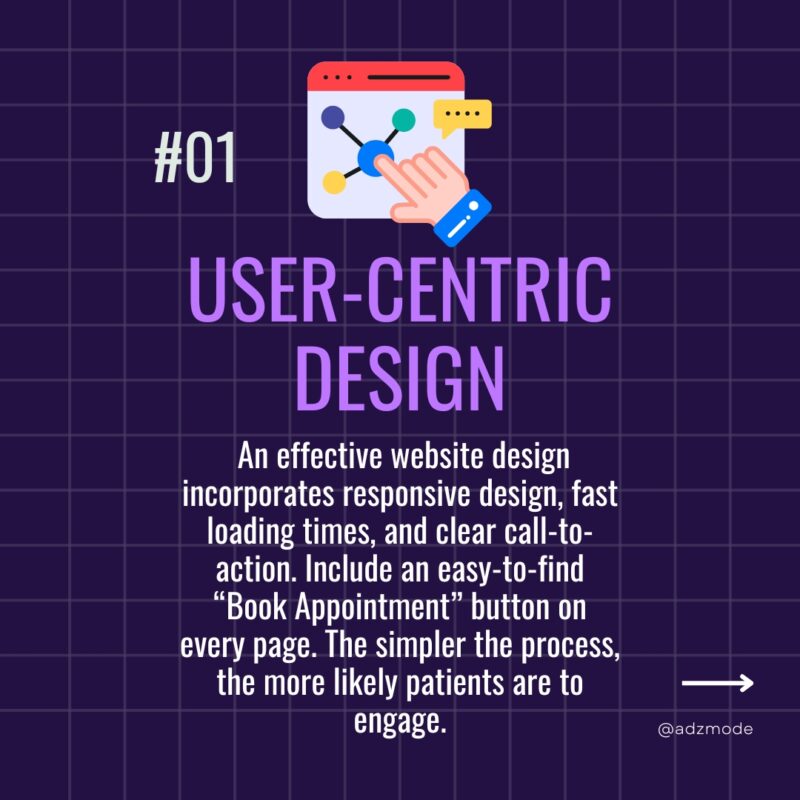
Over 80% of healthcare searches happen on mobile. If your site takes more than 3 seconds to load or the “Book Appointment” button is hidden under three menus, patients will bounce and book with a competitor whose site actually works.
Why It’s a Problem:
- Google punishes slow, outdated websites in search rankings.
- Patients judge your medical competence based on your website quality (fair or not, it’s true).
- A confusing website means lost appointments, lost revenue, and frustrated patients.
The Solution:
- Mobile-first design: Your site must look and function beautifully on phones.
- Fast load times: Compress images, use modern hosting, and optimize code.
- Clear navigation: Services, Contact, About, and Book Appointment should be one click away.
- Secure (HTTPS): If your site says “Not Secure,” patients will leave immediately.
- Online booking: Let patients book appointments 24/7 without calling.
If your website is holding you back, it’s time for an upgrade. Partnering with a professional web design company in India can be a strategic move here. They understand the Indian healthcare market, build mobile-optimized sites that load fast even on slower networks, and integrate features like multilingual support and online booking systems—all at a fraction of what international agencies charge. A modern, patient-friendly website isn’t an expense; it’s a revenue generator.

Challenge 4: You’re Invisible on Google (And Don’t Know Why)
You might have the best cardiology practice in your city, but if you don’t show up when someone searches “cardiologist near me,” you don’t exist in their world.
Most doctors don’t understand SEO (Search Engine Optimization), and that’s fine—you’re busy saving lives. But that ignorance costs you, patients, every single day.
Why It’s a Problem:
- Patients find the doctors who rank #1–3 on Google, not the best doctors.
- Your competitors might be less qualified but better at digital marketing.
- Without local SEO, you’re invisible to patients in your own neighborhood.
The Solution:
- Claim and optimize your Google Business Profile: This is non-negotiable. Complete every section, add photos, update hours, and post regularly.
- Local keywords: Use city/neighborhood names in your website content (“Pediatrician in South Delhi”).
- Create patient-focused content: Write blog posts answering common questions (“When should I see a dermatologist for acne?”).
- Get reviews: Google uses review quantity and quality as a ranking factor.
- Build backlinks: Get listed on Practo, JustDial, and local health directories.
Ranking on Google isn’t luck—it’s strategy. And if you’re serious about long-term growth, working with the best digital marketing agency in India that specializes in healthcare SEO can transform your visibility. These agencies understand Google’s YMYL (Your Money or Your Life) standards for medical content, know how to navigate HIPAA compliance, and can execute comprehensive campaigns—from content creation to review management to technical SEO—while you focus on treating patients. It’s not about doing everything yourself; it’s about partnering with people who know how to get results in a highly regulated industry.

Challenge 5: Patient Acquisition Costs Are Skyrocketing
Ten years ago, a referral or a local newspaper ad could fill your waiting room. Today, acquiring a new patient costs more than ever—especially if you’re relying solely on paid ads.
Why It’s a Problem:
- Google Ads for medical keywords are expensive (some cost ₹500–₹2000 per click).
- If you stop paying for ads, the patients stop coming.
- You’re competing with big hospital networks that have massive marketing budgets.
The Solution:
- Build organic visibility (SEO, content marketing) so you’re not 100% dependent on ads.
- Nurture existing patients: It’s cheaper to get a patient to return or refer others than to acquire a new one.
- Use retargeting: If someone visits your website but doesn’t book, show them follow-up ads reminding them to schedule.
- Track metrics obsessively: Know your cost-per-lead, conversion rate, and patient lifetime value so you can optimize what’s working and kill what’s not.
Smart marketing isn’t about spending more—it’s about spending smarter.
https://www.youtube.com/shorts/F0QsNLG8Kfw
Challenge 6: Keeping Up With Platform Changes (Google, Facebook, Instagram)
Just when you figure out how Facebook ads work, Meta changes the algorithm. Google rolls out a core update, and your rankings tank. Instagram prioritizes Reels over static posts.
The digital landscape shifts constantly, and most doctors don’t have time to keep up.
Why It’s a Problem:
- What worked six months ago might not work today.
- You’re competing against marketers who do this full-time.
- Without staying current, your campaigns become less effective over time.
The Solution:
- Focus on fundamentals that don’t change: helpful content, patient reviews, fast websites, and clear communication.
- Outsource to experts who stay updated on platform changes.
- Diversify channels: Don’t rely 100% on one platform (Google, Facebook, etc.). Spread your presence.

Challenge 7: Competing With Hospital Networks (When You’re a Solo Practitioner)
Big hospital chains have marketing departments, big budgets, and brand recognition. You’re a solo doctor or small clinic trying to compete.
Why It’s a Problem:
- They outspend you on ads.
- They dominate local search results.
- They have polished websites and social media teams.
The Solution:
- Leverage your personal brand: Patients want connection. Show your face, share your story, and be human. Big hospitals can’t compete with personal authenticity.
- Hyper-local targeting: Own your immediate neighborhood. Hospitals serve everyone; you serve your community.
- Niche down: Instead of being a “general physician,” become “the pediatrician parents trust in [neighborhood].”
- Patient experience: Compete on care quality, accessibility, and personal attention—not just marketing budget.
David can beat Goliath if David is smarter, faster, and more authentic.
social media marketing for healthcare
Challenge 8: Managing Your Online Reputation (Reviews Matter More Than Ever)
One angry patient leaving a 1-star Google review can undo months of good work. And the worst part? Potential patients trust online reviews more than your credentials.
Why It’s a Problem:
- 92% of patients read reviews before booking.
- One bad review with no response makes you look negligent.
- Fake reviews and competitor sabotage happen.
The Solution:
- Ask for reviews proactively: After a successful consultation, send a follow-up SMS with a direct link to your review page.
- Respond to every review: Thank positive reviewers and address negative ones professionally.
- Encourage volume: 50 reviews with a 4.5 average beat 5 reviews with a 5.0 average.
- Report fake reviews: Google allows you to flag fraudulent reviews.
Your reputation is your currency. Protect it actively.
FAQ: Healthcare Marketing Challenges
Q. What’s the biggest healthcare marketing challenge in 2026?
HIPAA compliance and earning patient trust are tied. You need to market aggressively while staying legally compliant and proving you’re trustworthy—both are hard.
Q. Can small clinics compete with big hospitals in digital marketing?
Yes—by focusing on personal branding, hyper-local SEO, and superior patient experience. You can’t outspend them, but you can out-care them.
Q. How much should a doctor spend on marketing?
A general rule: 5–10% of revenue. A small practice might start with ₹20,000–₹50,000/month and scale based on results.
Q. Is it better to hire in-house or outsource healthcare marketing?
Outsourcing to a specialized agency is usually smarter. They know HIPAA, healthcare SEO, and patient psychology. In-house makes sense only for large hospitals.
Q. How long does healthcare marketing take to show results?
Paid ads can bring patients within days. SEO and content marketing take 3–6 months but deliver compounding, long-term results.
Final Thoughts: Solve the Challenges or Get Left Behind
The healthcare marketing challenges of 2026 aren’t going away. If anything, they’re getting harder—more competition, stricter regulations, more skeptical patients, and faster platform changes.
But here’s the opportunity: most doctors and hospitals still aren’t doing this well. If you take these challenges seriously, invest in the right strategies, and partner with experts who understand healthcare-specific marketing, you’ll stand out dramatically.
Your medical skills got you here. Smart marketing will get you to the next level. The question is: will you adapt, or will you let your competitors take the patients who should be yours?
Share Your Project Requirements With Us