Your sales team is sleeping. Your best prospect just landed on your pricing page at 11:43 PM, spent four minutes reading every line, and then quietly closed the tab—no form filled, no call booked, no signal left behind. That’s not a traffic problem or a product problem. That’s a response gap problem. A well-built B2B lead generation chatbot doesn’t just fill that gap; it transforms your website into a round-the-clock pipeline engine that qualifies, segments, and books prospects before your competitors even wake up.
In 2026, the bar for B2B lead generation has shifted dramatically. Buyers expect immediate, personalized responses. Sales cycles are longer, buying committees are larger, and patience for generic outreach is essentially zero. The companies winning pipeline right now aren’t necessarily the ones with the largest sales teams—they’re the ones with the smartest systems. This guide walks you through the full build: from strategic foundation to technical execution, so you can deploy a chatbot that drives real revenue, not just engagement numbers.
Why Most B2B Chatbots Fail (And Yours Won’t)?
Let’s be direct: most B2B chatbots are digital business cards pretending to be salespeople. They open with “How can I help you today?”, collect a name and email address, and deposit the lead into a CRM where it quietly ages into irrelevance.
The failure isn’t the technology—it’s the strategy layered on top of it. Most chatbots are built to capture, not to qualify. That distinction matters enormously in B2B sales, where a bad-fit lead wastes more time, energy, and money than no lead at all. A marketing manager at a 10-person startup and a VP of Operations at a 500-person SaaS company might fill the same lead form—but they represent completely different sales conversations, timelines, and deal values. Your chatbot should know the difference before the conversation ends.
A high-performing B2B lead generation chatbot is deliberately engineered around three non-negotiable pillars:
- Intent detection—Reading the behavioral signals that reveal what stage of the buying journey the visitor is in, and responding with appropriate urgency and depth
- Qualification logic—Filtering leads by company size, budget range, decision-making authority, or pain point specificity before they ever touch a human sales rep
- Conversion action—Triggering a concrete next step: a calendar booking, a product demo, a gated content download, or a warm handoff to a live rep in real time
Build around these three pillars, and your chatbot stops being a glorified contact form. It becomes your most consistent, highest-volume SDR—one that never calls in sick, never has a bad quarter, and never forgets to follow up.
The 2026 Shift: Agentic AI Is Rewriting What’s Possible
If the last chatbot you evaluated was built two or three years ago, the version you should be building today is almost unrecognizable by comparison. Rule-based decision trees—the “if they say X, show Y” architecture that powered early chatbots—are rapidly being displaced by something far more capable.
Agentic AI for marketing is no longer a concept confined to enterprise tech labs or forward-thinking startups. These AI systems don’t simply respond to prompts in a linear sequence—they autonomously execute multi-step tasks with genuine contextual awareness. In a single conversation thread, an agentic chatbot can analyze a prospect’s publicly available professional context, personalize the opening message based on their industry vertical, route the conversation to the right sales rep based on territory rules, schedule a follow-up at the optimal time, and update multiple fields in your CRM—all simultaneously, all without a human trigger.
If your marketing stack isn’t yet powered by agentic AI for marketing, you’re running a Formula 1 race in a sedan. The road is identical, but the performance gap compounds with every mile, and your competitors are already in the pit lane upgrading their engines.
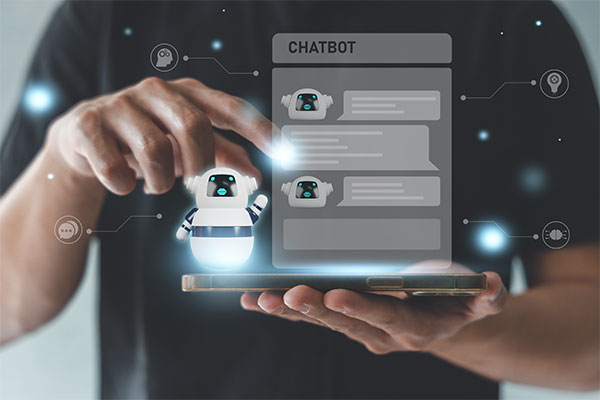
For B2B companies, the practical implication is substantial: your chatbot can now behave less like a scripted assistant and more like a trained SDR who deeply understands your ICP, adapts mid-conversation, and operates across every time zone without expanding your headcount. Qualification rates improve. Response times shrink from hours to seconds. The path from first website visit to booked meeting compresses from days to minutes.
1. Defining Your ICP Before Writing a Single Line of Logic
No chatbot—regardless of how sophisticated its underlying AI—can compensate for a poorly defined Ideal Customer Profile. This is foundational work, and skipping it is the single most common reason chatbots produce volume without value.
Before you touch any platform or write any conversation flow, answer these questions with genuine specificity:
1. Who are your best current customers? Not “mid-market companies”—nail the industry, headcount range, annual revenue, geography, and technology environment.
2. What specific pain triggered them to seek you out? Not “they wanted to grow”—what broke, what cost too much, what process embarrassed them to keep running manually?
3. What objections do they raise before committing? Price, timing, internal alignment, integration concerns?
4. Who actually signs the contract? The person filling your chatbot form is often not the economic buyer—your qualification logic needs to surface the real decision-maker.
5. What does their research journey look like? Do they read case studies first, compare alternatives, watch demos, or ask peers? This shapes which content you deploy at which moment.
Your chatbot’s qualification logic is a direct translation of these answers into conversation design. If your ICP is “Series B SaaS companies with 100–400 employees struggling with SDR efficiency,” every question your chatbot asks should be actively filtering for or against that profile. Anything beyond that is noise that dilutes your pipeline quality.
2. Selecting Your Chatbot Platform: What to Look For
Rather than endorsing specific tools, here’s exactly what your platform needs to support—use this as your evaluation checklist when comparing options:
- AI-native conversation handling, not just rule-based branching—the system should understand intent, not just keywords
- CRM integration depth—bidirectional sync, not just one-way lead pushing; your chatbot should read existing contact data and write back enriched records
- Calendar booking capability—native or deeply integrated scheduling that reflects live rep availability without back-and-forth emails
- Visitor identification features—the ability to recognize returning visitors and personalize accordingly
- Analytics and drop-off tracking—granular visibility into where conversations break down, not just overall conversion rates
- Multi-channel deployment—website, landing pages, email, and ideally in-app if you have a product with a free tier
- Human handoff protocols—seamless escalation to a live rep when intent signals spike, without disrupting the conversation flow
Prioritize platforms that treat conversation design and CRM integration as equal priorities—not ones that excel at one while treating the other as an afterthought.
3. Building the Conversation Architecture
This is where most teams get stuck. Writing chatbot conversations feels deceptively simple until you realize you’re building a branching screenplay with dozens of possible outcomes, each representing a real prospect with a specific set of expectations and a limited supply of patience.
The Core Qualification Flow
Structure your primary conversation around five deliberate stages:
1. Hook—Open with a specific, contextual statement tied to the exact page the visitor is viewing. “Looking at enterprise pricing? “Most teams in your space start by running the ROI math first—want me to walk you through it?” is infinitely more effective than “Hi! How can I help you today?”
2. Pain discovery—Ask one open-ended question about their current challenge. Let them describe it in their own words; the language they choose tells you exactly how to speak back to them in follow-up.
3. Fit qualification—2–3 targeted closed questions to assess ICP alignment: team size, current solution or process, decision timeline, and budget authority.
4. Value moment—Deliver a micro-insight, a relevant case study reference, or a specific stat that demonstrates you genuinely understand their world. This is the moment trust is either built or lost.
5. Conversion ask—Offer a clear, low-friction next step: a 20-minute discovery call, a personalized demo, or a resource tailored precisely to their stated challenge.
Keep the total exchange under 8 conversational turns. B2B buyers are time-pressed and constantly context-switching. Every unnecessary question beyond what’s required to qualify is friction you cannot afford.
top marketing workflows at automate
4. Tailoring Responses to Visitor Intent Level
Not every visitor is at the same point in their decision journey, and treating them identically is a reliable conversion killer. Your chatbot should behave differently based on where each visitor enters:
- Pricing page visitors → High-intent signal; lead with qualification and prioritize calendar booking within the first 3 turns
- Blog or resource page visitors → Low-to-mid intent; offer a relevant content upgrade, capture email, initiate a nurture sequence
- Case study page visitors → Social proof seekers; reinforce credibility with an additional proof point relevant to their industry, then offer a demo
- Returning visitors → Re-engagement opportunity; personalize the opening using previous interaction history and time elapsed since last visit
5. Integrating With Your Sales Stack
A chatbot that doesn’t communicate with your CRM is just a chat widget with ambitions. The integration layer is what separates a lead capture tool from a genuine revenue system—and it deserves as much strategic attention as the conversation design itself.
At minimum, your B2B lead generation chatbot should:
- Push qualified leads to your CRM with full context attached—conversation transcript, qualification responses, pages visited, time on site, and calculated lead score
- Trigger automated follow-up sequences in your marketing automation system based on segment, score, or explicitly stated intent
- Sync calendar bookings directly with your sales team’s live availability, eliminating the scheduling back-and-forth that kills momentum
- Alert sales reps in real time via their preferred channel when a high-intent lead is actively engaged on your site
- Update contact records automatically so your team walks into every discovery call with full context rather than starting from scratch
Workflow automation platforms and native API integrations handle most of this without requiring custom engineering. For agentic AI setups, direct API orchestration provides the deeper control that complex B2B sales processes require—particularly when routing logic involves multiple territories, product lines, or rep specializations.

Where Performance Marketing Agencies Fit In?
Building a best-in-class chatbot is only half of the equation. The other half—arguably the more commercially important half—is ensuring the right traffic is consistently flowing into it at volume.
Partnering with specialized performance marketing agencies means your chatbot isn’t passively waiting for organic visitors to trickle in—it’s being continuously fed a stream of high-intent, precisely targeted prospects through paid channels, converting your ad spend into a qualified pipeline at a measurable, predictable cost-per-meeting.
The compounding effect here is significant. When your paid ad creative, your landing page messaging, and your chatbot’s opening hook all speak the same language—same pain point, same audience segment, same value framing—the prospect experiences narrative continuity rather than a series of disconnected touchpoints. That continuity alone can lift chatbot conversion rates by 25–40% compared to misaligned traffic sources. A performance marketing agency that understands both paid acquisition and conversion architecture doesn’t just drive clicks; it builds the full-funnel ecosystem your chatbot needs to perform at its ceiling.
Measuring What Actually Matters
Vanity metrics are easy to celebrate and genuinely dangerous to optimize around. Track these revenue-connected KPIs instead:
- Chatbot-to-qualified-lead rate—What percentage of conversations produce an ICP-fit lead? This is your primary quality signal, not total conversations.
- Meetings booked per 100 conversations—Your real conversion benchmark; track it month-over-month as you iterate on copy and flow
- Lead-to-close rate from chatbot vs. other channels—This tells you whether your chatbot is attracting the right people or simply any people
- Drop-off point analysis—Which specific question or message causes prospects to abandon? This is your highest-leverage optimization point.
- Speed-to-human-handoff—For high-intent leads, time between qualification and sales rep contact directly impacts close rates; measure it obsessively
- Cost per booked meeting—Especially critical when your chatbot is being fed by paid traffic; tie it directly to your customer acquisition cost
Review these metrics weekly for the first 60 days post-launch. A single copy change in your opening hook or a reordered qualification question can produce 20–30% swings in conversion rate. Treat your chatbot like a live growth experiment, not a finished product you deploy and forget.
CLICK FOR MORE
Common Mistakes That Quietly Kill Chatbot Performance
Even well-intentioned builds fall into predictable traps:
- Starting with the platform, not the strategy—Choosing a tool before defining your ICP and qualification logic is building a house starting from the roof
- Overcomplicating the flow—More branches don’t produce better qualification; they produce more drop-off and more maintenance headaches
- Ignoring mobile experience—Over 40% of B2B research now happens on mobile devices; test your entire conversation flow on mobile before launch
- Removing the human fallback option—Some buyers categorically refuse to convert without speaking to a person; always offer that path clearly
- Treating it as a one-time build—Chatbots need monthly copy reviews and quarterly structural optimization; markets shift, objections evolve, and your flow needs to keep pace
- Misaligning ad traffic with chatbot messaging—When the promise in your ad doesn’t match the opening of your chatbot conversation, trust breaks immediately
CLICK FOR MORE
FAQs
Q: How long does it take to build a B2B lead generation chatbot?
A basic, functional chatbot with CRM integration can realistically be live within 1–2 weeks. A fully AI-native system with agentic workflows, deep sales stack integration, and multi-segment conversation flows typically takes 4–8 weeks, depending on your technical environment and internal approval processes.
Q: Do B2B chatbots work for complex, long sales cycles?
Yes, arguably more effectively than in short cycles. In long-cycle B2B sales, the chatbot’s primary job is qualification and nurture, not closing. It keeps leads warm, delivers relevant content at each stage, and routes them to the right rep at precisely the right moment, preventing deals from going cold between touchpoints.
Q: Should a chatbot replace human SDRs entirely?
No, and this framing misses the point. The most effective setup is a deliberate hybrid: the chatbot handles top-of-funnel qualification, initial objection handling, and meeting scheduling, while human SDRs focus their energy exclusively on consultative conversations with sales-ready leads. Your team becomes dramatically more productive; they just stop doing the work that a well-built system can do better at scale.
Q: What’s a realistic conversion rate benchmark for a B2B chatbot?
Well-optimized B2B lead generation chatbots consistently convert 15–30% of qualified conversations into booked meetings. Poorly configured ones sit below 5%. The performance gap is almost entirely explained by qualification logic, conversation design, and traffic quality—not the underlying platform.
Q: How do I get buy-in internally to invest in a chatbot?
Frame it around cost-per-meeting rather than technology spend. Calculate what your team currently spends—in time and tools—to generate and qualify one sales-ready meeting. A well-built chatbot typically reduces that cost by 40–60% within the first quarter. That’s the number that wins budget conversations.
Ai automation agency vs traditional marketing agency
Key Takeaways
The B2B lead generation chatbot is no longer a competitive advantage—it’s rapidly becoming the baseline expectation for any company serious about pipeline efficiency and sales team productivity. In 2026, the gap between companies running agentic, deeply integrated chatbots and those still relying on static forms and manual follow-up is measurable in revenue, not just metrics.
Build around your ICP. Design for qualification first, capture second. Integrate deeply with your sales stack so context travels with every lead. Feed it with targeted, intent-matched traffic. And treat it as a living system that compounds in value with every conversation it processes, every optimization you make, and every deal it influences.
Your best sales rep never sleeps, never loses momentum, and never forgets to follow up. It’s time to build one.
About the Author: Harleen

Share Your Project Requirements With Us