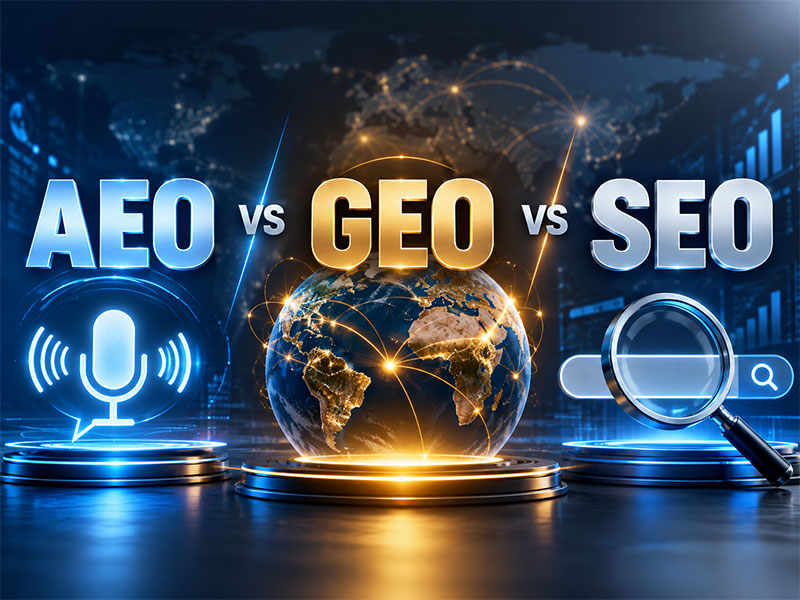
A framework for AEO strategy is a repeatable process for making your business the source that answer engines (Google AI Overviews, Google AI Mode, ChatGPT, Gemini, Claude and Perplexity) choose to cite or recommend when buyers ask questions. The framework below has eight steps: define business goals, map buyer questions, audit AI visibility, fix technical eligibility, publish answer-first content, build entity authority, convert AI-driven visitors, and measure and iterate.
AEO stands for Answer Engine Optimization. It extends SEO rather than replacing it. Google’s own guidance says there are no special files, markup or additional requirements to appear in AI Overviews or AI Mode, so sound SEO fundamentals still apply. AEO adds a sharper focus on the questions buyers ask and on the clarity, evidence and credibility of your answers.
Why Business Owners Need an AEO Strategy Now
Buyers increasingly get a synthesized answer before they ever see a list of links, so ranking alone no longer guarantees you are seen. Reported figures vary by source and change quickly. One Similarweb-based report says AI Overviews appeared in 43% of searches, up from 15% a year earlier. Treat such numbers as directional and check the original source before quoting them.
What matters for lead generation is this:
- Fewer, higher-intent clicks. Some informational queries get answered on the results page. The visits that remain often come from people comparing options or ready to act.
- Shortlisting happens earlier. If an AI answer names three providers and you are not one of them, you are excluded before the buyer visits any website.
- Visibility is harder to see in analytics. AI-influenced visits often don’t look like normal Google clicks, so measurement needs a different approach.
Step 1: Define the Business Outcome Before the Keywords
Start with the lead you want, then work backwards to the questions that lead asks. An AEO strategy without a revenue target tends to produce traffic that never converts.
Write down four things:
1. Offer: the 1–3 services or products you most want to sell.
2. Ideal customer: industry, company size, city, budget range.
3. Lead definition: what counts as qualified (a demo request, a call booking, a WhatsApp enquiry with a stated budget).
4. Value per lead: your average close rate and deal value, so you can judge whether AEO is paying off.
This takes under an hour and prevents the common mistake of optimizing for impressive-looking but irrelevant queries.
Step 2: Map the Questions Your Buyers Actually Ask
Answer engines work on questions, so your content plan should be a question map, not a keyword list. AI systems often break one complex prompt into several related searches (Google calls this query fan-out), so you need coverage across the whole decision journey, not one page per keyword.
Group questions by stage:
| Stage | Example question pattern | Content type |
|---|---|---|
| Problem-aware | “Why are my website leads dropping?” | Explainer, diagnostic checklist |
| Solution-aware | “What is AEO and how is it different from SEO?” | Definition page, comparison |
| Vendor-aware | “How much does an AEO agency charge in India?” | Pricing guide, evaluation checklist |
| Decision | “Is AEO worth it for a 20-person company?” | Case examples, ROI framing, FAQs |
Where to find real questions: sales call recordings, WhatsApp and email enquiries, Google Search Console queries, “People also ask” boxes, and the questions AI tools suggest as follow-ups. Your sales team’s repeated objections are the most valuable source and are rarely covered by competitors.
Step 3: Audit Your Current AI Visibility
Before changing anything, measure whether answer engines currently mention you. This baseline is what lets you prove progress later.
Method:
1. Pick 25–50 prompts from your question map, written the way a buyer would type them (for example, “best accounting software for small manufacturers in Pune”).
2. Run each prompt in Google AI Mode or AI Overviews, ChatGPT, Gemini and Claude. Use a logged-out or clean session where possible.
3. Record, for each result: whether you are mentioned, whether you are cited with a link, which competitors appear, which sources are cited, and whether the information about you is correct.
4. Repeat monthly with the same prompts. AI answers vary between runs, so look at trends across many prompts rather than any single result.
Illustrative scorecard (format only, not real data):
| Prompt | Engine | Mentioned? | Cited? | Accurate? | Competitors named |
|---|---|---|---|---|---|
| [prompt 1] | AI Mode | No | No | n/a | A, B |
| [prompt 1] | ChatGPT | Yes | No | Partly | A |
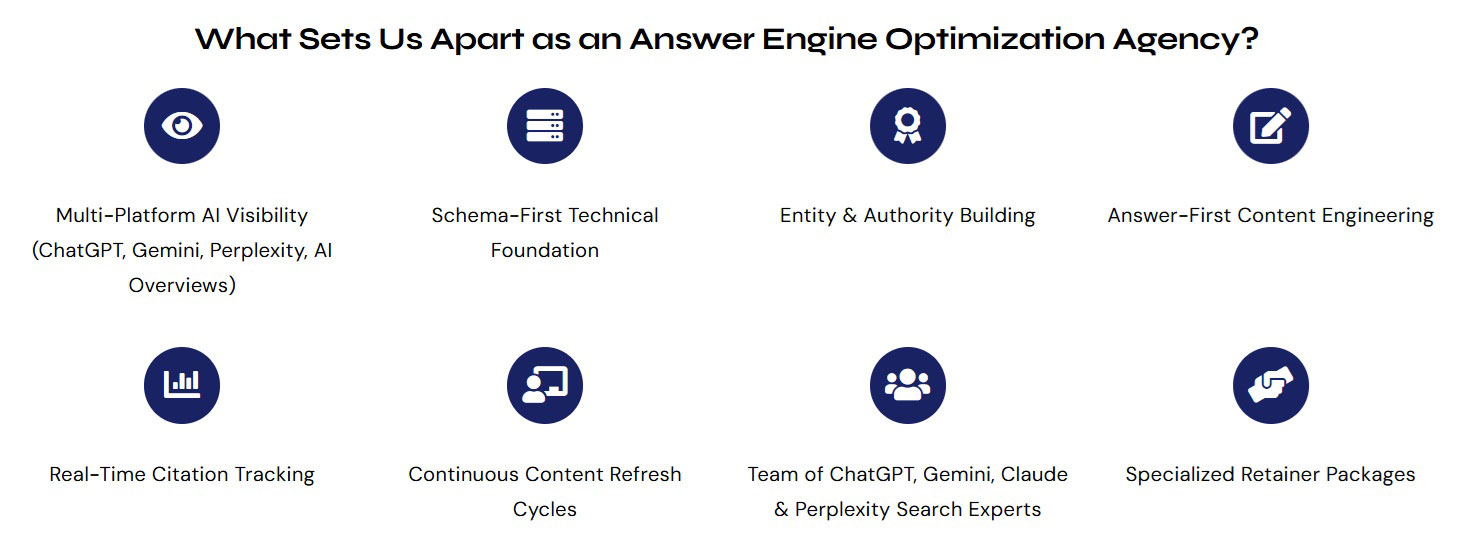
If you want specialist support at this stage, an AEO agency in India with experience in local buyer behaviour can run this audit across English and Hinglish queries and several cities. At Adzmode, our AEO team audits how your business appears across Google, ChatGPT, Gemini and Claude, then turns the gaps into a prioritized, lead-focused roadmap.
Step 4: Fix Technical Eligibility
If a page cannot be crawled, indexed and understood, it cannot be cited. Google states that its AI features rely on the same crawl, index and ranking systems as standard Search, so technical SEO remains the foundation.
Check these items:
- Indexability: key pages return a 200 status, are not blocked by robots.txt or noindex tags, and appear in Search Console’s index report.
- Crawler access: if you want visibility in other AI tools, confirm your robots.txt does not accidentally block their crawlers. Each vendor documents its own crawler names, so verify these in the official documentation.
- Rendering: important text should be present in the HTML, not hidden behind scripts or tabs that crawlers may not load.
- Page speed and mobile experience: most Indian buyers search on mobile, often on variable networks.
- Structured data: use schema types that match visible content (Organization, LocalBusiness, Article, FAQPage, Product, Service). Markup should describe what is on the page, not add claims that are not there.
- Clean URLs and internal links: link each answer page to its parent topic and to related questions.
An agentic AI for marketing can speed up this step and is a simple software that plans and completes multi-step tasks with limited supervision. Examples include crawling your site, flagging broken schema, and drafting a fix list. Our team of IIT experts at Adzmode, use agentic AI workflows for marketing to automate audits, monitoring, and reporting, while our strategists keep judgment, brand voice, and accuracy in human hands. Whatever tool is used, a person should review every recommendation before it goes live.

Step 5: Publish Answer-First Content
Place a direct answer of roughly 40–60 words under each question heading, then expand with detail. This helps both readers and AI systems extract a self-contained answer without losing context.
A reliable page template:
1. H2 or H3 phrased as the buyer’s question.
2. A direct answer that names the subject explicitly (avoid “it” and “this”).
3. Supporting explanation: reasons, steps, conditions, exceptions.
4. Evidence: a calculation, example, dated statistic with its source, or your own data.
5. A next step: what the reader should do now.
What makes content citable rather than generic:
- Specifics: state price ranges, timelines and thresholds, and say when they vary.
- Original information: your own survey results, anonymized client benchmarks (only if you can substantiate them), process documents, or templates.
- Honest limits: say who your solution is not for. This builds trust and often matches how buyers phrase their queries.
- Named authors: show who wrote or reviewed the page and their real experience. Do not invent credentials.
- Freshness: show “last updated” dates and revisit pricing and regulatory content regularly.
Common mistakes: writing one thin page per keyword variation, burying the answer after long introductions, publishing AI-written text without expert review, and making claims you cannot support.
Step 6: Build Entity Authority Beyond Your Website
Answer engines recommend brands they can clearly identify and see corroborated elsewhere. An entity is a distinct, identifiable thing: your company, founder, product or location. The goal is consistent, verifiable information across the web.
Priorities:
- Consistent identity: the same business name, address, phone number, description and category everywhere.
- Google Business Profile: complete and active, especially if you serve local customers.
- Review presence: genuine reviews on platforms your buyers use. Never buy or fabricate reviews.
- Third-party mentions: industry directories, trade association listings, relevant publications, podcasts, and partner pages.
- About, author and leadership pages: clear statements of who you are, what you do, for whom, and where.
- Entity disambiguation: if your brand name resembles another company’s, state your full name, location and services prominently so systems do not confuse the two.
Treat this as reputation building. It takes months, and it is a sustainable advantage because it is difficult to copy quickly.
Step 7: Turn AI-Driven Visitors into Qualified Leads
AEO only pays off if the visits convert. Visitors who arrive after reading an AI summary are often further along in their decision, so make the next step obvious and low-friction.
- Match the landing page to the query. An answer about pricing should link to a pricing or consultation page, not the homepage.
- Offer a relevant call to action: a free AI-visibility audit, a checklist download, or a 20-minute strategy call.
- Reduce form friction: ask for the minimum, and offer WhatsApp or call-back options, which many Indian buyers prefer.
- Qualify early: one or two optional fields (budget range, timeline) help sales prioritize.
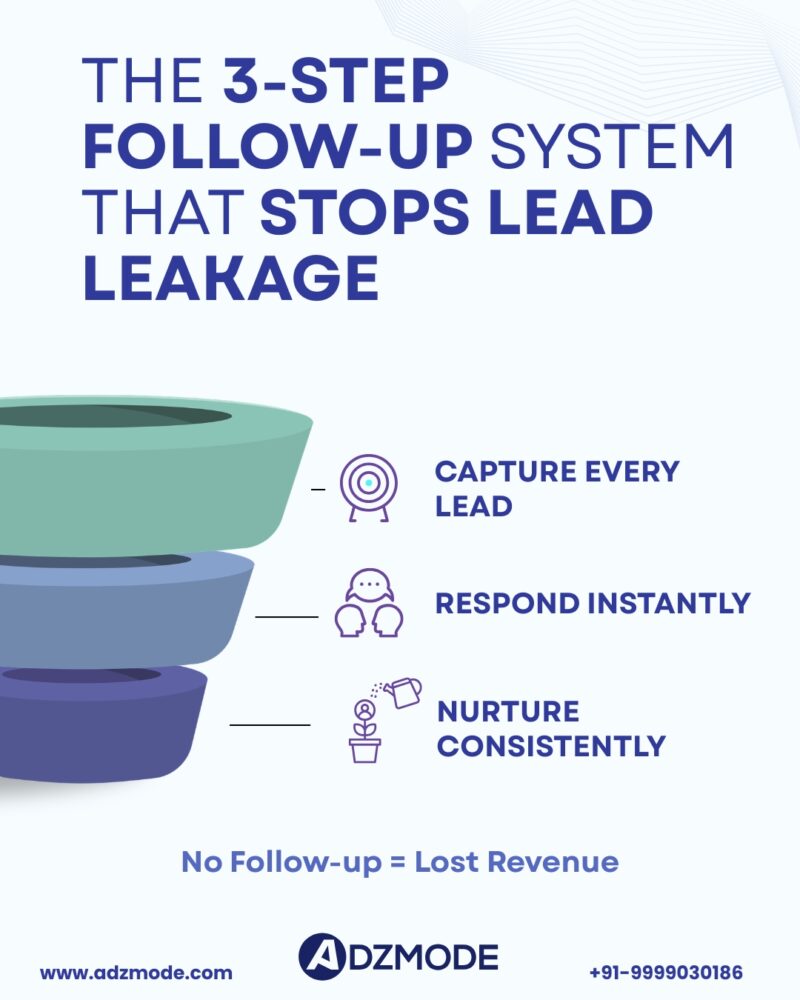
- Respond fast: speed to first response strongly affects whether an enquiry turns into a conversation. Set an internal target and track it.
Step 8: Measure, Learn and Iterate
Measure visibility, traffic and revenue separately, because each tells you something different.
| Layer | What to track | Tool examples |
|---|---|---|
| Visibility | Mentions and citations across your fixed prompt set | Manual logging, third-party AI-visibility tools |
| Search performance | Impressions, clicks, queries | Google Search Console |
| Traffic | Referrals from AI platforms, branded search growth | GA4 |
| Business impact | Qualified leads, pipeline, closed revenue | CRM |
Reports indicate that Google introduced a generative AI performance report in Search Console in June 2026, which would give site owners a dedicated view of AI Overviews and AI Mode performance. Confirm its current availability and metrics in your own Search Console account.
Run a 90-day cycle: audit in month one, fix and publish in months one to three, re-run the same prompts at day 90, and compare. Expect gradual movement, not overnight results. No agency or tool can guarantee a specific position in AI answers, because these systems vary and change.
CLICK FOR MORE
Who This Framework Suits, and Who It Doesn’t
Best suited to: B2B services, professional services, SaaS, healthcare and education providers, and local businesses where buyers research before contacting a vendor.
Less suited to: businesses with no website or very low search demand, those needing leads within days (paid channels are faster), and those unwilling to publish original, expert-reviewed content.
how to optimize website content for chatgpt
Key Takeaways
- A framework for AEO strategy runs from goals, to question mapping, to audit, to technical fixes, to answer-first content, to entity authority, to conversion, to measurement.
- Google states no special markup or files are needed for its AI features, so strong SEO fundamentals plus clear, trustworthy answers are the basis of AEO.
- Build content around buyer questions, with a direct answer first and evidence second.
- Track mentions and citations across a fixed prompt set monthly, and tie results to qualified leads, not just traffic.
- Agentic AI can speed up audits and monitoring, but human review protects accuracy and brand credibility.
- Avoid guarantees. AI answers are variable, and results build over months.
Frequently Asked Questions
What is the difference between AEO and SEO?
SEO aims to rank pages in search results. AEO aims to make your content the clear, trusted source that answer engines quote or recommend. They share foundations such as crawlability, quality content and authority, but AEO places extra emphasis on question-led structure, direct answers and entity clarity.
How long does AEO take to show results?
Technical fixes and content updates can be picked up within weeks, but authority and consistent citations usually take several months. Plan on a 90-day cycle for first measurable movement and longer for competitive topics. No one can guarantee timelines or placements.
Do I need special schema or an “llms.txt” file for AEO?
Google says no special markup or AI-specific files are required to appear in its AI features. Standard structured data that accurately reflects page content is still useful for clarity. Other platforms may behave differently, so verify their official documentation.
Is an AEO agency in India necessary, or can I do it in-house?
Smaller businesses can start in-house using this framework. An agency helps when you lack content, technical or measurement capacity, or need speed. Choose one that shares a scope, reporting method and realistic expectations, and avoids ranking guarantees.
What is agentic AI for marketing?
It refers to AI systems that carry out multi-step marketing tasks (research, monitoring, drafting, reporting) with limited human input. It is useful for repetitive work, but outputs should be reviewed by a person for accuracy, compliance and brand fit.
How do I know if AEO is generating leads?
Track four layers: AI mentions and citations from your prompt set, Search Console data, referral and branded-search trends in GA4, and qualified leads in your CRM. Add a “How did you hear about us?” field to forms to capture AI-influenced discovery.
Does AEO replace paid ads or traditional SEO?
No. SEO provides the technical and content base, AEO adds answer-focused structure and authority, and paid channels deliver faster, more controllable demand. Most businesses benefit from a combination, weighted by budget and timeline.
Can AI-generated content work for AEO?
It can assist with drafting, but unreviewed generic text rarely earns citations. Add original data, expert review, accurate sourcing and clear authorship before publishing.
About the Author: Harleen Kaur

Mrs. Harleen is a Digital Marketing professional and Gen AI SEO expert based in New Delhi. Academically backed by an IIT Digital Marketing Certification and two prestigious IBM credentials — Gen AI Certified for Digital Marketing and a Master's in Gen AI SEO — Harleen specialises in helping businesses grow their digital presence using the latest AI-driven strategies. Her insights are grounded in both technical expertise and real-world application. Prompting essentials from IBM.
Share Your Project Requirements With Us