Here’s a scenario playing out across thousands of businesses right now: two competitors enter the same market with similar products, similar budgets, and similar teams. Twelve months later, one is generating three times the qualified leads at half the cost per acquisition. The difference isn’t talent. It isn’t a budget. It’s that one business automated its top marketing workflows with AI, and the other is still doing the same things manually that AI can now do better, faster, and around the clock.
Marketing automation with AI isn’t a future investment for business owners anymore. It’s a present competitive reality. And the gap between businesses that have built AI-powered marketing systems and those that haven’t is widening every quarter.
This guide breaks down exactly which marketing workflows to automate first, how each one works, and what it delivers for your bottom line.
Why AI Marketing Automation Is Different This Time?
Business owners have heard “automate your marketing” for over a decade. Email drip sequences, scheduled social posts, basic CRM workflows — none of that is new.
What’s new is the intelligence layer.
Previous marketing automation was rules-based: if a contact does X, trigger Y. It was static, brittle, and still required enormous human effort to set up, maintain, and personalize at any meaningful scale.
AI-powered marketing automation is adaptive. It analyzes behavior in real time, makes decisions based on patterns across thousands of data points, generates personalized content dynamically, and continuously optimizes its own performance based on results.
The practical difference: old automation did what you told it to do. AI automation figures out what should be done and does it — often better than a human team would.
Workflow 1: Lead Capture and Intelligent Qualification
What it replaces: Manual form review, hours-later follow-up, inconsistent lead quality screening
This is the highest-impact automation for most business owners focused on lead generation — and the one with the most immediate, measurable ROI.
Every minute between a prospect’s first intent signal and your first meaningful response, conversion probability drops. Research shows that responding to a lead within five minutes makes you nine times more likely to convert them than waiting thirty minutes. Human teams simply cannot deliver that consistently, especially outside business hours.
AI changes the math entirely.
What automated lead qualification looks like in practice:
- A prospect lands on your service page at 9 PM on a Sunday. An AI agent initiates a natural, contextually relevant conversation, not a scripted chatbot, but an intelligent system that understands what page they’re on and what question would be most useful to ask
- The AI qualifies them through conversation: budget range, timeline, specific need, decision-making authority
- It enriches their profile with real-time data pulled from integrated databases, company information, industry, and likely tech stack
- It assigns a lead score and routes high-intent prospects to your priority pipeline immediately, with full conversation context attached
- Your sales team wakes up to a list of warm, pre-qualified leads with complete information, not cold names that need hours of manual research
Workflow 2: Email Nurture Sequences That Actually Adapt
What it replaces: Static drip campaigns, generic follow-up sequences, manual segmentation updates
Generic email drips have a fundamental problem: they treat every prospect identically, regardless of how they’re actually behaving. Someone who’s opened every email and visited your pricing page three times gets the same sequence as someone who hasn’t engaged with anything in three weeks.
AI-powered email nurture fixes this completely.
What adaptive email nurture delivers:
- Behavioral branching: A prospect who clicks a pricing link gets a different next email than one who clicks a case study. The sequence responds to actual behavior, not a predetermined calendar
- Send-time optimization per individual: AI analyzes each contact’s historical engagement patterns and sends emails at the exact time that individual is most likely to open, not a blanket platform-wide assumption
- Dynamic content personalization: Email content adapts based on industry, company size, funnel stage, and expressed interests, so two different prospects receive versions of the same campaign that feel written specifically for them
- Automated re-engagement: Contacts who go quiet are identified early and moved into re-engagement sequences before they go completely cold
The business outcome isn’t just better open rates. It’s shorter sales cycles, because prospects are being nurtured with the right content at the right moment rather than the right content at the wrong time.
Workflow 3: Content Creation and Distribution at Scale
What it replaces: Slow content production cycles, expensive volume content costs, and bottlenecked distribution
Content is the engine of demand generation for most business owners, including blog articles, LinkedIn posts, email newsletters, landing page copy, and case study drafts. The problem is that producing enough of it consistently requires either a large team or a budget most businesses can’t sustain.
AI changes the content production equation dramatically.
What AI-powered content operations look like:
- Research and brief generation: AI analyzes search intent data, competitor content, and keyword opportunities to generate fully formed content briefs in minutes rather than days
- First draft production: AI generates structured first drafts that a human editor refines rather than writes from scratch, cutting content production time by 60–70% for most teams
- SEO optimization in real time: AI-driven optimization tools analyze top-ranking content and provide recommendations as content is written, not after
- Repurposing at scale: A single long-form article automatically becomes LinkedIn posts, email newsletter content, social media snippets, and short-form video scripts, multiplying the value of each content investment
- Automated distribution: Content is scheduled and distributed across channels based on AI-determined optimal timing and audience segmentation
Workflow 4: Paid Advertising Optimization
What it replaces: Manual bid management, static audience targeting, and delayed creative performance analysis.
Paid advertising has always been partially automated at the platform level. But AI has pushed that automation to a point where thousands of real-time optimization decisions—that previously required a skilled specialist’s full attention—are now being made automatically and continuously.
What AI advertising automation delivers:
- Real-time bid optimization: AI adjusts bids continuously based on conversion probability signals—time of day, device, user behavior history, competitive auction dynamics—capturing high-intent moments and pulling back on low-probability impressions automatically
- Predictive audience targeting: Rather than manually building audience segments, AI analyzes your existing customer data to identify lookalike audiences with the highest predicted conversion probability
- Automated creative testing: AI tests multiple ad creative variations simultaneously, identifies winners faster than traditional A/B testing timelines, and automatically reallocates budget toward top performers
- Cross-channel budget allocation: AI analyzes performance across all paid channels and recommends—or in some configurations, automatically executes—budget reallocation to the channels delivering the best cost per acquisition in real time
AI marketing is changing B2B lead generation
Workflow 5: Social Media Management and Community Engagement
What it replaces: Manual posting schedules, reactive community monitoring, one-size-fits-all messaging
Social media management for business owners is one of those tasks that’s always there, always urgent, and rarely strategic when done manually under time pressure. AI transforms it from a reactive, time-consuming obligation into a proactive, data-driven brand-building system.
What AI-powered social operations include:
- Platform-specific content generation: One content idea generates multiple variations—each optimized for the tone, format, and audience behavior of that specific platform
- Optimal posting time analysis: AI analyzes your audience’s engagement patterns and schedules posts at statistically optimal times per platform and audience segment
- Social listening and sentiment monitoring: AI monitors brand mentions, competitor activity, and industry conversations in real time—surfacing opportunities to engage before they peak
- Engagement management: AI handles routine responses, flags high-priority interactions for human attention, and ensures no meaningful engagement falls through the cracks
Workflow 6: CRM Data Management and Pipeline Intelligence
What it replaces: Manual data entry, inconsistent pipeline hygiene, gut-feel sales forecasting
A CRM is only as valuable as the quality of data inside it. And in most businesses, CRM data is a mess — incomplete records, outdated contact information, inconsistent tagging, and pipeline stages that reflect what salespeople entered rather than what’s actually happening with each deal.
What AI-powered CRM management delivers:
- Automatic data enrichment: Every contact record is automatically populated and kept current with firmographic data, company news, and professional information—without manual research
- Predictive deal scoring: AI analyzes historical win and loss patterns and assigns each active deal a conversion probability score based on dozens of behavioral and firmographic signals—helping sales teams prioritize the right opportunities at the right time
- Automated pipeline hygiene: Stale deals, missing follow-up tasks, incomplete contact records—AI identifies and flags these automatically, keeping pipeline data clean without manual audits
- Churn prediction: For businesses with recurring revenue, AI models identify customers showing disengagement signals before they cancel—enabling proactive retention efforts that protect revenue

Workflow 7: Marketing Analytics and Performance Reporting
What it replaces: Hours spent pulling reports, manual dashboard maintenance, and delayed performance insights
Most business owners make marketing decisions based on last month’s data, assembled in a manual report that took half a day to produce. By the time it’s ready, the window to act on the insights has often passed.
AI-powered analytics delivers insights in real time — and increasingly, acts on them automatically.
What automated marketing analytics provides:
- Unified cross-channel dashboards: AI aggregates performance data from every marketing channel — paid, organic, email, social, CRM — into a single, continuously updated view
- Anomaly detection: AI identifies statistically significant performance changes — a sudden conversion rate drop, an unexpected traffic spike — and alerts your team immediately rather than waiting for the weekly report
- Natural language reporting: Ask plain-language questions — “Which campaigns generated the most pipeline last quarter?” — and receive immediate, accurate answers without building custom reports
- Predictive revenue forecasting: Based on current pipeline, historical conversion rates, and real-time signals, AI generates forward-looking revenue projections that inform budget and resource decisions
How to Connect These Workflows Into One Intelligent System?
Here’s the mistake most business owners make when they start automating: they implement individual tools in isolation. A qualification chatbot here. An email automation there. A social scheduling tool somewhere else.
The tools don’t talk to each other. Data doesn’t flow between them. And instead of an intelligent marketing system, they end up with a collection of disconnected point solutions that each solve one small problem independently.
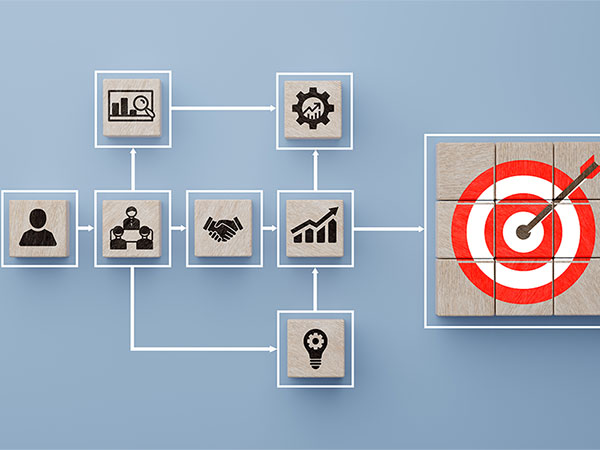
The real power of AI marketing automation comes from integration — building a connected system where your lead qualification feeds your CRM, your CRM triggers the right nurture sequence, your email engagement informs your paid advertising targeting, and your analytics pulls everything into a single performance view.
When these connections exist, the system compounds. Better data produces better AI decisions. Better decisions produce better leads. Better leads produce more revenue data. More revenue data trains better models. The flywheel accelerates on its own.
This is exactly where working with a specialized AI automation agency becomes one of the highest-return decisions a business owner can make. Rather than spending six months and significant internal resources piecing together workflows that half-work, the right agency brings pre-built integration frameworks, battle-tested automation architectures, and deep expertise across the specific platforms your business needs. They don’t just install tools — they design and deploy a complete, connected AI marketing system tailored to your sales process, lead criteria, and revenue goals. For business owners where speed to result matters, this isn’t outsourcing. It’s the difference between having AI marketing tools and having an AI marketing system that actually generates a pipeline.
Measuring ROI Across Your Automated Workflows
Automation without measurement is just complexity. Here are the metrics that actually indicate whether your AI marketing workflows are delivering business value:
Lead generation metrics:
- Time to first response — should drop to under two minutes with AI in place
- Cost per qualified lead — should improve by 30–60% within 90 days
- Lead-to-opportunity conversion rate
Nurture and engagement metrics:
- Email open and click rates — AI personalization should outperform generic sequences by 30–50%
- Funnel velocity — how quickly leads move from first touch to sales conversation
- Content engagement by channel and format
Revenue metrics:
- Marketing-attributed pipeline value
- Customer acquisition cost trend over time
- Revenue per marketing dollar — the ultimate efficiency metric
Review these monthly for the first quarter. The AI learns and improves with more data — your job during this period is to keep data clean, adjust logic based on what the numbers show, and systematically scale what’s working.
Building Strategy Around Automation — Not Just Automation Around Activity
There’s a critical distinction that separates businesses achieving transformational results from AI marketing automation and those achieving marginal efficiency gains: the former use automation to amplify a clear strategy, while the latter automate their existing tactical activity without questioning whether that activity is the right strategy to begin with.
Before automating any workflow, answer three questions:
1. What specific business outcome is this workflow designed to produce?
2. How will I measure whether it’s producing that outcome?
3. What requires a human that this workflow cannot handle?
That last question matters enormously. AI marketing automation is most powerful when it handles volume, speed, personalization at scale, and data analysis — freeing your human team for the strategic, creative, and relational work that AI genuinely cannot replicate.
The businesses with the most effective AI marketing systems haven’t removed human judgment from marketing. They’ve elevated it by removing the operational burden that was preventing their people from doing their highest-value work.
This is precisely where having a skilled performance marketer directing your AI marketing strategy pays dividends that pure technical implementation cannot deliver. A performance marketer with AI fluency doesn’t just configure automation — they define the lead scoring criteria that make qualification actually meaningful, build attribution models that tell you which workflows are driving revenue versus which are driving noise, and continuously optimize the full system based on business outcomes rather than dashboard vanity metrics. They connect the efficiency of AI automation to the strategy that determines where that efficiency should be pointed. For business owners who want AI marketing automation to compound into genuine, measurable growth — not just operational tidiness — this strategic human layer is what separates good results from exceptional ones.
FAQ: Top Marketing Workflows and AI Automation
Q. Which marketing workflow should a business owner automate first?
Lead capture and qualification, without question. It delivers the fastest, most measurable ROI — reducing response time from hours to seconds and improving lead quality almost immediately. Start there, get it working properly, then layer in additional workflows.
Q. How much budget do I need to start automating my marketing workflows with AI?
A functional entry-level AI marketing setup covering lead qualification, email nurture, and basic analytics can be operational for $800–$2,000/month. Full-stack implementation with custom integrations and ongoing management typically ranges from $3,000 to $10,000/month, depending on complexity and scale.
Q. Will AI automation replace my marketing team?
No, and businesses that approach it as a replacement rather than an augmentation typically get the worst results. AI handles volume, speed, and pattern recognition. Humans handle strategy, creative direction, relationship management, and nuanced judgment. The best implementations redeploy human effort upward, not eliminate it.
Q. How long does it take to see measurable results from AI marketing automation?
Lead response time improvements are visible within days of implementation. Meaningful improvements in qualified lead volume and cost per acquisition typically appear within 60–90 days as the system accumulates sufficient behavioral data to optimize against.
Q. Do I need technical expertise to manage AI marketing workflows once they’re set up?
For standard commercial workflows, day-to-day management doesn’t require deep technical expertise. For complex, integrated systems connecting multiple platforms with custom logic, ongoing technical support or agency partnership is strongly recommended to maintain performance and implement improvements over time.
b2b digital marketing strategies
The Bottom Line: The Window for Easy Competitive Advantage Is Closing
Right now, there’s still a meaningful gap between businesses that have built AI-powered marketing systems and those that haven’t. That gap creates a real competitive advantage for early movers — better leads, lower acquisition costs, and marketing operations that scale without proportionally scaling costs.
But that window won’t stay open indefinitely. As AI marketing tools become more accessible and widely adopted, the advantage shifts from simply “using AI” to “using AI better” — which means getting the fundamentals right, building connected systems rather than isolated tools, and measuring against real business outcomes consistently.
The top marketing workflows covered in this guide represent the core of what a modern AI-powered marketing system looks like. Automate them well, connect them intelligently, and measure them honestly. The business that does this consistently doesn’t just compete more effectively today — it builds a marketing infrastructure that compounds in capability and efficiency every month going forward.
That’s not a marginal improvement. That’s a structural advantage.
Share Your Project Requirements With Us