Most businesses don’t lose money on bad products — they lose it on bad marketing decisions. You hired an agency, ran campaigns, waited weeks for a report, and still weren’t entirely sure what actually moved the needle. The retainer kept going out. The leads stayed lukewarm. And the agency’s answer was always the same: “Give it more time.” The question was never whether marketing matters. The real question — the one most business owners don’t ask until they’ve already burned through a significant budget — is whether the type of agency they’re working with is quietly limiting their growth. Today, that question has a sharper answer than ever before because the marketing world has fundamentally split into two distinct models: traditional agencies built on human effort and experience, and AI-automation agencies engineered around data, systems, and intelligent execution.
This isn’t a trend piece about what’s coming. This is a practical, side-by-side comparison designed to help you decide where your next marketing budget should go — and why the decision matters more in 2026 than it ever has before.
What a Traditional Marketing Agency Actually Does?
Traditional marketing agencies have spent decades building their value proposition around four core pillars: creative storytelling, brand strategy, media buying, and dedicated account management. At their best, these agencies are genuinely impressive. They bring seasoned strategists, bold creative directors, and hard-won industry relationships to the table. They understand how to craft a brand narrative that resonates emotionally with an audience — and that’s a real skill that shouldn’t be dismissed.
But beneath the polished pitch decks and monthly review calls, there’s a structural limitation that no amount of talent can fully resolve: traditional agencies are fundamentally built on manual effort. Every campaign tweak requires a human. Every audience adjustment goes through a process. Every performance report gets compiled, reviewed, and sent on a schedule — not the moment something changes in your market.
This creates a pace problem. Digital marketing moves fast. Consumer behavior shifts mid-week. Ad platforms update their algorithms without announcement. In an environment that rewards speed and agility, a model built on weekly standups and monthly reporting cycles is always playing catch-up. And when you’re the business owner funding that delay, the cost isn’t just in wasted ad spend — it’s in missed opportunities that your competitors are capturing while your agency is still putting together the brief.
There’s also the scalability issue. Want to triple the output of your lead generation campaigns? A traditional agency needs to hire more people, onboard them, align them to your brand, and build the infrastructure to manage the increased workload. That takes months and costs significantly more. The agency grows, and so does your invoice.
What an AI Automation Agency Brings to the Table?
An AI automation agency operates from a fundamentally different architecture. Instead of relying on teams of people to manually execute marketing tasks, these agencies deploy intelligent systems — powered by machine learning, predictive analytics, and automated workflows — that run, monitor, and optimize campaigns continuously, without downtime, without handoff delays, and without the bottlenecks that come with human-dependent processes.
The scope of what AI automation covers today is broader than most business owners realize. It spans paid ad optimization, lead scoring, email nurturing sequences, chatbot-driven engagement, dynamic content personalization, social media scheduling and testing, CRM updates, customer segmentation, and real-time performance reporting — all running simultaneously, all adjusting based on live data.
Companies deploying AI-driven marketing systems report 30–50% efficiency gains in campaign management. Agencies using autonomous AI agents have seen conversion rates double while requiring 40% fewer resources for campaign creation. Operational costs drop by up to 30% through automation alone. These aren’t speculative projections — they’re figures being reported by businesses that made the switch.
For a business owner, this translates to something simple and significant: your campaigns don’t stop when your account manager is unavailable. Your targeting doesn’t depend on someone’s intuition. Your lead pipeline generates activity around the clock — including at 2 AM on a Sunday when your competitors’ agencies are offline.
Looking to scale your business with intelligent systems? If you’re searching for a reliable AI automation agency in India that combines sharp strategy with end-to-end automation — from lead capture to nurturing to conversion — you’re no longer looking for a vendor. You’re looking for a growth partner that builds revenue machines tailored to your specific market, your audience, and your goals. One that works while you sleep, scales when you’re ready, and never burns your budget on guesswork.
Head-to-Head: Where the Real Differences Lie
| Dimension | Traditional Marketing Agency | AI Automation Agency |
|---|---|---|
| Decision-Making | Experience and intuition-driven | Data and algorithm-driven |
| Speed | Weekly/monthly optimization cycles | Real-time, continuous optimization |
| Scalability | Scales linearly with headcount | Scales exponentially with data |
| Lead Generation | Manual outreach, relationship-based | Automated, targeted, measurable |
| Cost Model | Retainer or project-based | Performance-aligned, leaner overhead |
| Personalization | Segment-level targeting | Individual-level, dynamic targeting |
| Reporting | Periodic (weekly/monthly) | Real-time dashboards, live metrics |
| ROI Visibility | Lagging indicators | Instant attribution, live tracking |
| Operating Hours | Business hours, human-dependent | 24/7, fully autonomous execution |
| Adaptability | Manual campaign adjustments | Automatic pivoting based on live data |
The Lead Generation Problem: Who Actually Solves It?
Lead generation is where the gap between these two models becomes impossible to ignore — and where most business owners feel the pain most acutely. Traditional agencies run campaigns, generate a list of leads, and hand them over. What happens next is largely your problem. Follow-up, qualification, nurturing — these often fall back on your internal team, many of whom aren’t equipped or resourced to handle an unpredictable volume of inbound interest.
An AI automation agency builds the entire funnel as a living, intelligent system. The moment a lead enters your ecosystem — whether through a paid ad, a landing page, a chatbot, or an organic search — the system takes over. It scores that lead based on behavioral signals and intent data. It routes them into the appropriate nurturing sequence. It sends personalized follow-ups at the optimal time. It flags high-intent leads for your sales team while continuing to warm up those who aren’t ready yet. And it tracks everything, attributing revenue to the exact touchpoint that drove conversion.
This isn’t incremental improvement over what a traditional agency does — it’s a completely different approach to what a marketing system should look like. The result is a measurable reduction in cost-per-acquisition, a significantly shorter sales cycle, and a lead pipeline that doesn’t dry up between campaign bursts.
Studies have found that businesses implementing AI-driven autonomous marketing systems report an average return of $5.44 for every $1 invested — a 544% ROI over a three-year period. For any business owner who has watched a traditional agency burn through budget without a clear return, that number reframes the conversation entirely.
top marketing workflows to automate
Performance Marketing: The Model That Changes the Rules
Here’s a distinction that separates good AI automation agencies from great ones — and it’s one that most business owners overlook entirely. The best AI automation agencies don’t just automate. They operate with a performance marketer mindset at their foundation.
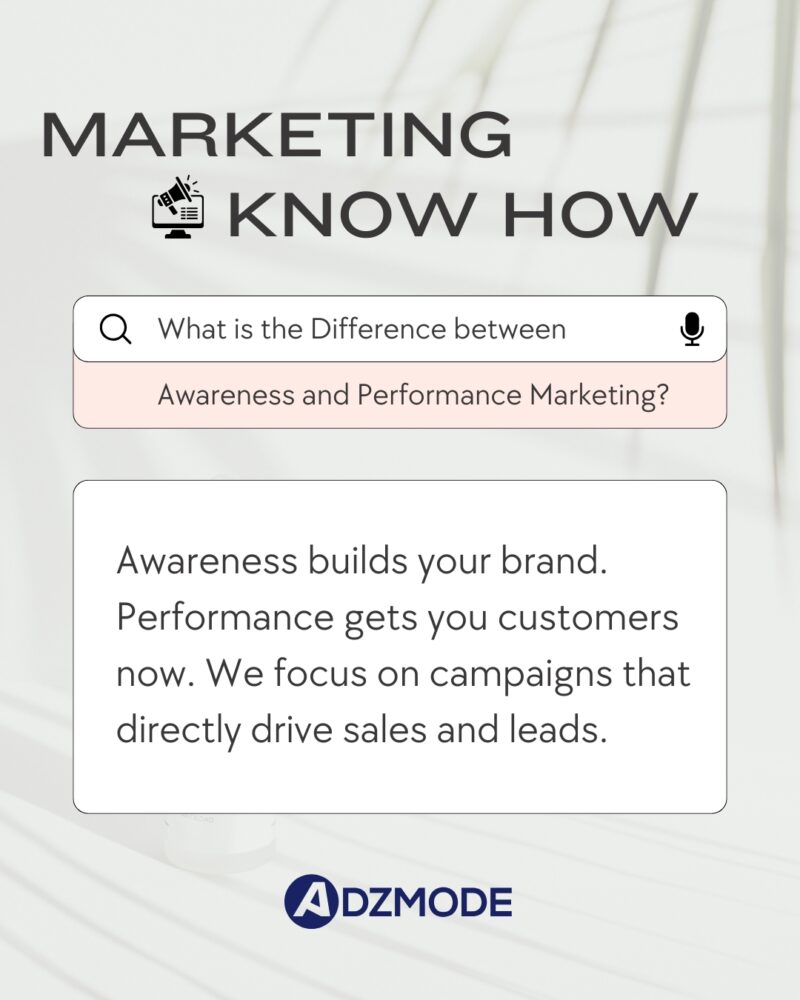
Performance marketing is a model where every activity is accountable to a measurable outcome. You don’t pay for effort, hours, or impressions. You pay for clicks, leads, and conversions — actions that directly connect to your revenue. This accountability model, combined with the precision and speed of AI-driven execution, creates something that neither traditional agencies nor basic automation tools can replicate on their own.
When AI automation and performance marketing work together, your campaigns are not just running — they’re constantly being evaluated against your business goals, adjusted in real time, and optimized to deliver the lowest possible cost per result. There’s no guessing, no waiting for the monthly report to find out a campaign underperformed, and no awkward conversation where the agency reframes failure as a “learning phase.”
Every variable — ad copy, audience segment, bid strategy, landing page layout, email subject line — becomes a data point that feeds into a smarter, more efficient system with every passing hour.
Stop paying for marketing that might work. A results-obsessed performance marketer doesn’t hide behind vanity metrics like reach and impressions — they put your cost-per-lead, cost-per-acquisition, and revenue attribution on a live dashboard you can check anytime. That’s what accountable marketing looks like. If your current agency can’t show you that level of transparency, you’re not their client — you’re their cash flow. You deserve a marketing partner whose success is directly tied to yours.
When a Traditional Agency Still Makes Sense?
This comparison isn’t designed to declare traditional agencies irrelevant — because they’re not. There are specific scenarios where a seasoned human team remains the right call, and being clear about those scenarios makes this analysis more useful, not less.
If your business is navigating a major brand repositioning — redefining your market identity, launching into a new category, or recovering from a reputation challenge — the strategic depth and creative judgment of an experienced traditional agency is genuinely difficult to replicate with AI systems. Brand-level decisions involve cultural nuance, emotional intelligence, and stakeholder management that still benefit enormously from skilled human direction.
Similarly, B2B businesses with long, relationship-driven sales cycles — where a deal might take 12 to 18 months to close and involves multiple decision-makers — may find that the personalized, consultative approach of a traditional agency complements their sales process better than a fully automated funnel.
And for businesses in highly regulated industries — financial services, pharmaceuticals, legal — where every piece of marketing content must pass strict compliance review, the careful, human-checked approach of a traditional agency provides a layer of risk management that automation alone doesn’t yet match.
The critical point is this: most businesses are not in these categories. Most businesses need consistent lead generation, measurable ROI, and marketing that scales efficiently. And for that majority, the traditional model is the wrong tool for the job.
Why India Is the Perfect Market for AI-Driven Marketing?
India’s business environment in 2026 is uniquely suited for the AI automation model — and business owners here have a genuine first-mover advantage if they act on it now. The Indian market is vast, diverse, multilingual, and digitally aggressive. Consumer behavior varies sharply across geographies, age groups, income brackets, and languages. This is precisely the kind of complexity that AI systems are built to handle — and that manual agency teams struggle to manage at scale.
Traditional marketing agencies in India have historically borrowed frameworks designed for Western markets, often applying them without meaningful adaptation to local consumer behavior. An AI automation agency in India, by contrast, can build segmentation models that reflect the actual diversity of the Indian market — running different messaging in different regions, adjusting offers based on local purchasing patterns, and personalizing communication in ways that a team of humans simply cannot sustain manually.
Beyond personalization, there’s the cost-efficiency argument. India’s SMB ecosystem is cost-sensitive by necessity. AI automation delivers enterprise-grade marketing capability — the kind that large corporations spend crores to build internally — at a price point that growing businesses can actually access. For an Indian startup or scaling SMB, that’s not just an operational advantage. It’s a structural shift in what’s possible.
How to Evaluate Which Model Is Right for Your Business?
Before making a decision, run through these four questions honestly:
1. What is your primary marketing goal right now? If it’s brand building, a hybrid approach may work. If it’s lead generation and revenue growth, AI automation is the stronger choice.
2. How important is real-time visibility into your marketing performance? If you need to know what’s working now — not in next month’s report — AI automation is the only model built for that.
3. Do you need to scale quickly without scaling your costs proportionally? AI systems scale with data, not headcount. Traditional agencies scale with people.
4. Are you currently paying for marketing outputs (hours, deliverables) or marketing outcomes (leads, revenue)? If you’re paying for outputs, you’re taking all the performance risk yourself.
There’s no universal answer. But for the majority of business owners reading this — those who are growth-focused, digitally active, and tired of marketing that feels like a cost center rather than a revenue engine — the evidence clearly favors the AI automation model.
The Real Cost of Staying With the Wrong Model
There’s one final consideration that rarely makes it into agency comparison articles, and it’s the most important one: opportunity cost. Every month you stay with a slower, manual system is a month your competitors with smarter systems are pulling ahead. They’re capturing leads you didn’t reach, nurturing prospects you didn’t follow up with, and closing customers that were available to you — but not to your process.
The shift from a traditional agency to an AI automation agency isn’t just about saving money on your current campaigns. It’s about compressing the time between marketing investment and revenue return. It’s about building a system that gets smarter the longer it runs, rather than a team that bills the same rate whether results improve or not.
The marketing landscape in 2026 rewards speed, precision, and accountability. The agency model you choose is either accelerating your growth or quietly constraining it. Choose the one that’s built for the world you’re actually operating in.
AI marketing is changing B2B lead generation
FAQs
1. What is the main difference between an AI automation agency and a traditional marketing agency?
A traditional agency relies on manual processes, human strategy, and experience-driven decisions that operate on weekly or monthly cycles. An AI automation agency uses machine learning, behavioral data, and automated systems to continuously optimize campaigns in real time — resulting in faster execution, sharper targeting, lower cost-per-acquisition, and fully transparent ROI tracking.
2. Is an AI automation agency suitable for small and mid-size businesses in India?
Absolutely — and in many ways, smaller businesses benefit the most. AI automation eliminates the need for large in-house marketing teams, giving SMBs access to enterprise-level marketing capability at a fraction of the cost. An AI automation agency in India can build and run sophisticated lead generation systems that would otherwise require a team of ten people to manage manually.
3. What does a performance marketer actually do differently?
A performance marketer ties every marketing activity directly to measurable business outcomes — leads, conversions, and revenue. Unlike traditional marketers who may prioritize brand awareness metrics, a performance marketer operates with full financial accountability, adjusting spend, targeting, and creative in real time to ensure that every rupee invested is returning a calculable result.
4. Can AI automation replace human creativity in marketing?
Not entirely — and the best AI automation agencies don’t position it that way. AI excels at data processing, audience targeting, personalization at scale, and real-time optimization. Human creativity still leads in high-stakes brand storytelling, cultural strategy, and complex stakeholder communication. The strongest results come from combining both: AI handling execution precision while human strategists guide the overall direction.
5. How quickly can an AI automation agency start generating leads?
Most AI automation systems can be deployed and producing measurable results within days, rather than the weeks or months a traditional agency typically requires for setup, onboarding, and campaign launch. The majority of businesses see a meaningful improvement in their lead pipeline within the first 30 to 60 days — with performance continuing to improve as the system accumulates more data over time.
Share Your Project Requirements With Us